Someone gave me the following link over on the TwEECer list as we were discussing optimizing spark tables:
http://www.viatrack.ca/
I took a look at the web site. Looks like these guys are Volvo hackers. They might have something there. Looks like we could overlay their knock signal onto the FN724A function and have the EEC pull spark on knock detection.
I sent them a note to get some questions answered.
Anyone have any experience with them?
Thoughts?
Moderators: EDS50, cgrey8, 2Shaker, Jon 94GT
-
A6intruder
- Regular
- Posts: 170
- Joined: Tue May 17, 2005 9:02 pm
- Contact:
Knock sensor - possible tuning help?
Dan Nicoson
1994 Mustang GT, CHP 331 forged crank bottom end, single Holset HX35W turbo, AFR 165 heads, TF Intake, "Baby" Crower cam with Beehive springs, TwEECer using BE and DataQ data logger
1994 Mustang GT, CHP 331 forged crank bottom end, single Holset HX35W turbo, AFR 165 heads, TF Intake, "Baby" Crower cam with Beehive springs, TwEECer using BE and DataQ data logger
It will not work on an eec like the MegaSquirt due to the input filtering and most likely throw an error. I am not even sure if the MS pulls spark when knock occurs and it is fed into the ECT signal, I suspect it is merely a way of datalogging knock.
I would recommend using your DataQ to datalog the output from the knock sensor.
I would recommend using your DataQ to datalog the output from the knock sensor.
-
A6intruder
- Regular
- Posts: 170
- Joined: Tue May 17, 2005 9:02 pm
- Contact:
Sounds good :) I looked at this product too but never got around to it.
The only question I have about this system is whether a sensor other than the Bosch one can be used. I am just thinking that knock sensors come in a variety of slightly differing frequency detecting ranges and it would be better to use one that suits your engine than the Bosch possibly does (I know this would probably involve a bit of trial and error testing).
The only question I have about this system is whether a sensor other than the Bosch one can be used. I am just thinking that knock sensors come in a variety of slightly differing frequency detecting ranges and it would be better to use one that suits your engine than the Bosch possibly does (I know this would probably involve a bit of trial and error testing).
-
A6intruder
- Regular
- Posts: 170
- Joined: Tue May 17, 2005 9:02 pm
- Contact:
One part of their web site talks about needing the cylinder bore diamter for your motor so they can configure the electronic filter to work with your motor.
I'm waiting to hear back from them.
I'm waiting to hear back from them.
Dan Nicoson
1994 Mustang GT, CHP 331 forged crank bottom end, single Holset HX35W turbo, AFR 165 heads, TF Intake, "Baby" Crower cam with Beehive springs, TwEECer using BE and DataQ data logger
1994 Mustang GT, CHP 331 forged crank bottom end, single Holset HX35W turbo, AFR 165 heads, TF Intake, "Baby" Crower cam with Beehive springs, TwEECer using BE and DataQ data logger
-
stang&2Birds
- Gear Head
- Posts: 41
- Joined: Sat Nov 04, 2006 1:01 am
Where would you even put a knock sensor on a 5.0 or Mod engine?
The location of the knock sensor is very important.
To use a knock sensor with an EEC, you'd need an external controller/adapter since most knock sensors are "similar" to the MAP/BAP in that you care about the frequency of the output. So, a frequency to voltage level adapter would be needed.
Still, unless a good place for the sensor could be found, it wouldn't be very useful. Also, don't forget that the V8's have the hot headers next to the sides, and a bunch of stuff in the front. So, that leaves maybe the back cylinders.
That's if you wanted to use the easy add-on version:
http://www.viatrack.ca/Knock/Porsche%20sensor%20006.jpg
http://www.viatrack.ca/Knock/KS%20NissanSR20DET.jpg
The screw in knock sensors are more accurate and have fewer issues with mounting problems. Most knock sensors that I've seen are more similar to this version:
http://www.viatrack.ca/Knock/Dodge_ksensor.jpg
However, for those with boost, maybe even having a sub-optimal and poor location for a knock sensor might be beneficial? It would be at least as good as a human response. But, if that's fast enough or good enough is another issue. :)
FWIW: Of the top of my head, I think that the following hack could be done with a knock sensor. That's assuming that the knock sensor worked, and there are some simple add-on electronics. It would use the basic EEC strategies.
Have the add-on electronics modify the ECT signal from ECT to max when a knock is detected. Have the add-on electronics hold it there for "some amount of time" (milliseconds to 1+ seconds). Modify the ECT spark retard table to pull a lot of timing at the upper ECT limit.
The location of the knock sensor is very important.
To use a knock sensor with an EEC, you'd need an external controller/adapter since most knock sensors are "similar" to the MAP/BAP in that you care about the frequency of the output. So, a frequency to voltage level adapter would be needed.
Still, unless a good place for the sensor could be found, it wouldn't be very useful. Also, don't forget that the V8's have the hot headers next to the sides, and a bunch of stuff in the front. So, that leaves maybe the back cylinders.
That's if you wanted to use the easy add-on version:
http://www.viatrack.ca/Knock/Porsche%20sensor%20006.jpg
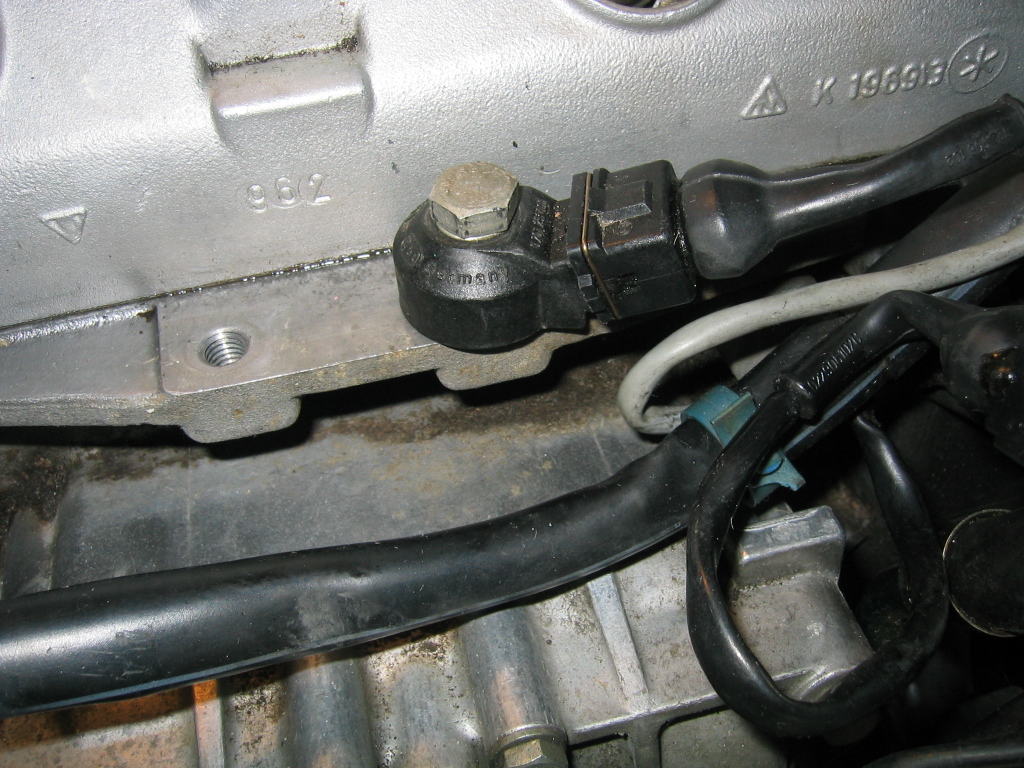
http://www.viatrack.ca/Knock/KS%20NissanSR20DET.jpg
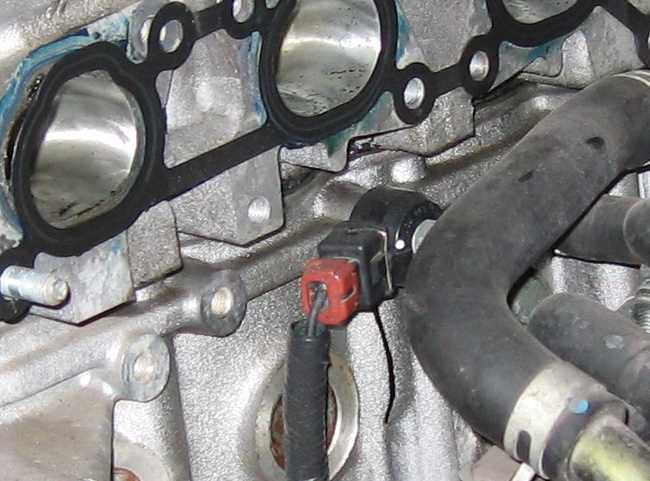
The screw in knock sensors are more accurate and have fewer issues with mounting problems. Most knock sensors that I've seen are more similar to this version:
http://www.viatrack.ca/Knock/Dodge_ksensor.jpg
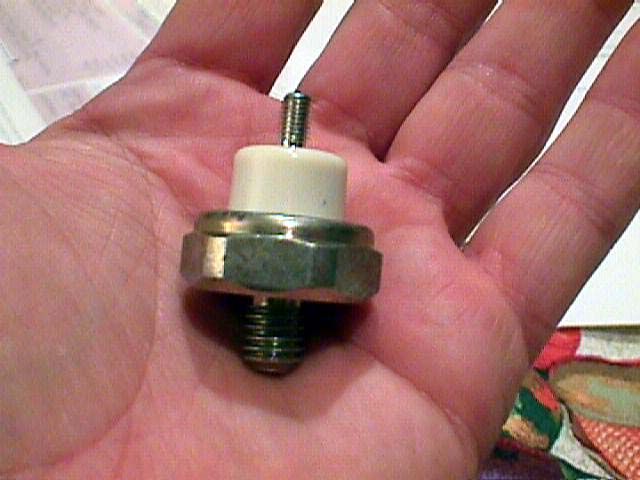
However, for those with boost, maybe even having a sub-optimal and poor location for a knock sensor might be beneficial? It would be at least as good as a human response. But, if that's fast enough or good enough is another issue. :)
FWIW: Of the top of my head, I think that the following hack could be done with a knock sensor. That's assuming that the knock sensor worked, and there are some simple add-on electronics. It would use the basic EEC strategies.
Have the add-on electronics modify the ECT signal from ECT to max when a knock is detected. Have the add-on electronics hold it there for "some amount of time" (milliseconds to 1+ seconds). Modify the ECT spark retard table to pull a lot of timing at the upper ECT limit.
Some of the guys over at the SCCOA are looking at this,
http://www.jandssafeguard.com/VampirePa ... mpire.html
Our cars already have a knock sensor which is good at or near stock, but some are questioning it above those levels because things like headers and big cams can actually change the harmonics of detonation going through the block and the sensor won't respond to it.
'90 TBird SC 3.8L Supercharged
Gen III Eaton's M90 Blower, Blower OD'd at 12%, 76mm C&L MAF, 75mm ProProd TB, 42# RC Eng Inj, AFPR set at 43.5psi, Comp CAM Custom Grind .484 Intake .520 Exh, Duration @ 0.050 204 Int 206 Exh.
Gen III Eaton's M90 Blower, Blower OD'd at 12%, 76mm C&L MAF, 75mm ProProd TB, 42# RC Eng Inj, AFPR set at 43.5psi, Comp CAM Custom Grind .484 Intake .520 Exh, Duration @ 0.050 204 Int 206 Exh.
-
Jack Hidley

- Regular
- Posts: 64
- Joined: Mon May 12, 2003 1:13 am
- Location: Danville CA USA
Let me clear up a few things.
The vibrations that knock sensors pick up is due to the transverse acoustic resonance in the cylinder after detonation occurs. In acoustics terms, this is called a standing wave. The frequency of this resonance is directed related to the diameter of the cylinder and the speed of sound. The speed of sound in a gas is a function of density and pressure, so the exact standing wave frequency changes during engine rotation. Here is the rough formula for calculating the standing wave frequency that a given cylinder will have.
Frequency = 21,900/bore diameter in inches
A given knock sensor is tuned to have its maximum output at this frequency. Knock sensors will respond to all frequencies, they just have their highest output (gain) at this frequency. Technically they have a bandpass output. In this sense they are narrow band. They output a voltage which is proportional to the amplitude of the noise they sense. They are not frequency output devices. No frequency to voltage convertor is needed.
There are some knock sensors that are wide band. The filtering to make them respond to the correct frequency is done in the analog domain or digital domain in the ECU.
To make an effective knock sensor system, you need the ECU to have a map of knock sensor output under different load/rpm conditions when no knock is present. It can then use the levels in this map as a threshold to determine if the current signal level from the knock sensor indicates knock or just engine noise.
In the 5.0l and 5.8l Ford engines, Ford put the knock sensor in the lower intake manifold near the middle. I think this was an attempt to get it equal distance from all eight cylinders. A better location would be to screw it into the block in the lifter galley, but then you would have to deal with access and wiring. This is where they are located on the 4.6l engines.
Jack Hidley
Maximum Motorsports Tech Support
Maximum Motorsports Tech Support
-
stang&2Birds
- Gear Head
- Posts: 41
- Joined: Sat Nov 04, 2006 1:01 am
That's correct! :)Jack Hidley wrote:A given knock sensor is tuned to have its maximum output at this frequency. Knock sensors will respond to all frequencies, they just have their highest output (gain) at this frequency. Technically they have a bandpass output. In this sense they are narrow band. They output a voltage which is proportional to the amplitude of the noise they sense. They are not frequency output devices. No frequency to voltage convertor is needed.
That's not 100% correct. Knock sensors don't output a solid voltage level. They output a sine wave. As you mentioned, knock sensors are basically "a microphone". They are sensitive to vibrations and produce a frequency and voltage that corresponds to the vibration.Jack Hidley wrote:They are not frequency output devices. No frequency to voltage convertor is needed.
I didn't go into more detail before. Knock sensors are basically "AM" (Amplitude Modulation") devices. They output a sine wave that varies in frequency and in amplitude.
This article has a decent graph of what the output of a knock sensor might look like: (figure 2-90)
http://www.autoshop101.com/forms/h38.pdf
So, simply you could think of the output as a voltage proportional to knock. And, some very simple knock sensors will just look for a voltage over a certain value. But, since the output is a sine wave, that period will be brief. And, in reality, many things can cause a spike in the knock sensors output, but at a frequency that is not relevant to engine knock.
For example, on my Olds, my manifold heat shield is missing a hold down bolt. I'd have to take off the manifold, and drill and tap for a stud. That's okay, I'll leave it banging against the manifold. :) At times, you can hear that vibrating very well because of resonance frequencies. The ECM (GM EFI software *rules*) ignores that loud noise (voltage level from the knock sensor) because it's in the wrong frequency domain. But, a simple "voltage only" knock sensing system would respond.
In real life, there are things like bumps, slamming doors, etc that could result in the voltage level of a knock sensor to go past some point. But, the frequency output from the knock sensor wouldn't be in the engine knock range.
Here are some great references
Intersil HIP9011
Engine Knock Signal Processor
http://www.intersil.com/cda/deviceinfo/ ... 011,0.html
Datasheet: * Engine Knock Signal Processor
http://www.intersil.com/data/fn/fn4367.pdf
Evaluation Board(s) Evaluation Board(s):
* Engine Knock Sensing Applications (HIP9011EVAL1Z):
http://www.intersil.com/data/an/an9770.pdf
Here are a few data sheets for common knock sensors:
http://www.siemensvdo.de/NR/rdonlyres/8 ... latten.pdf
http://delphi.com/manufacturers/auto/se ... broadband/
If you look at the Intersil evaluation board and chip, that's the correct way to do knock sensing. And, that's how vehicle manufactures do it. It's much more involved that just looking at the raw voltage output from the knock sensor.
FWIW: That "mess" of a design ;) that the Intersil evaluation board does is the type of stuff I do. I have to properly analyze often "funky" signals (noise, scrambling, etc) and then do something "reasonable". It's different from my "packet pushing" (network routers) days. But, it's more interesting because I get more involved in the mechanical aspects and designs of products.
-
Jack Hidley
- Regular
- Posts: 64
- Joined: Mon May 12, 2003 1:13 am
- Location: Danville CA USA
-
stang&2Birds
- Gear Head
- Posts: 41
- Joined: Sat Nov 04, 2006 1:01 am
Yup, *I* know that is what you meant. :)Jack Hidley wrote:I wasn't trying to imply that the knock sensor put out a DC voltage. Being a microphone, with a very nonflat frequency response, it of course puts out an AC voltage, when an AC pressure is applied to it.
But, I was concerned that others may have thought that it was possible to just use a knock sensor, and hook it up to the EVP input, and munge some code around that "voltage level" input.
Some micro-controllers can take knock sensor inputs directly and do "DSP" (Digital Signal Processing) on the signals without the need for something like the knock sensor chip. But, that puts a lot of "real time" requirements on the micro-processor unless it has dedicated internal circuitry.
FWIW: A Cypress PSoC would be ideal to take in a knock sensor input, and maybe also the ECT, and output an analog voltage that the EEC could use. It's a simple and very cheap solution. So far, the Cypress PSoC is the only "real" programmable "analog" chip. It also has a micro-processor (24 MHz) so that it can do software processing on the inputs. So, it could do frequency checking and "pulse stretching".
I've used PSoC chips for the past couple of years. (I do mostly million+ gate FPGAs.) I've used PSoC chips mostly in generating test signals. Also, I'll use PSoC chips for data collection that is dependent of different conditions - if these 5 things happen, collect data until the 6th thing happens.
Or, one of the knock sensor chips could also be used in place of something like the EVP input and code could be munged around it. People could even use the Intersil evaluation board for their hardware. For the past ~4 years, evaluation boards have been the initial way that many companies do projects. For one thing, it helps to give Software "something" they can use to get their code development started. Even if the eval boards do only 20% of the final product, the head start that the Software people can get makes it well worth it. For one thing, it helps them get a lot of their initial bugs out.
Either way, there are options. It all depends on if someone has the time and desire to play with it. :)
Who is online
Users browsing this forum: No registered users and 162 guests